
It’s all happening
**Disclaimer**
The point of this is not to be a good or artistic retelling of my highs and lows of the famed “Peace Corps experience.” But simply a single place to put my thoughts other than my chicken scratch diary and brain of doom. Never once have I claimed to be a writer. In fact, writing is my weakness. Grammar, spelling, quippy-ness, the whole shebang. Concise explanation in general is one of my frequent pitfalls. You will realize that soon if not already. Give me grace. If you’re interested, you’ll read, if not, look at the pretty pictures when included ;)
Despite no longer being a Volunteer with the Peace Corps as of March 21st, 2026, I still wanted to share these thoughts, opinions, and stories I jotted down about my experience. This blog was written January 12th, 2026 and just never published so all of the content below, reflects my status and emotions at that time.
Quick Intro
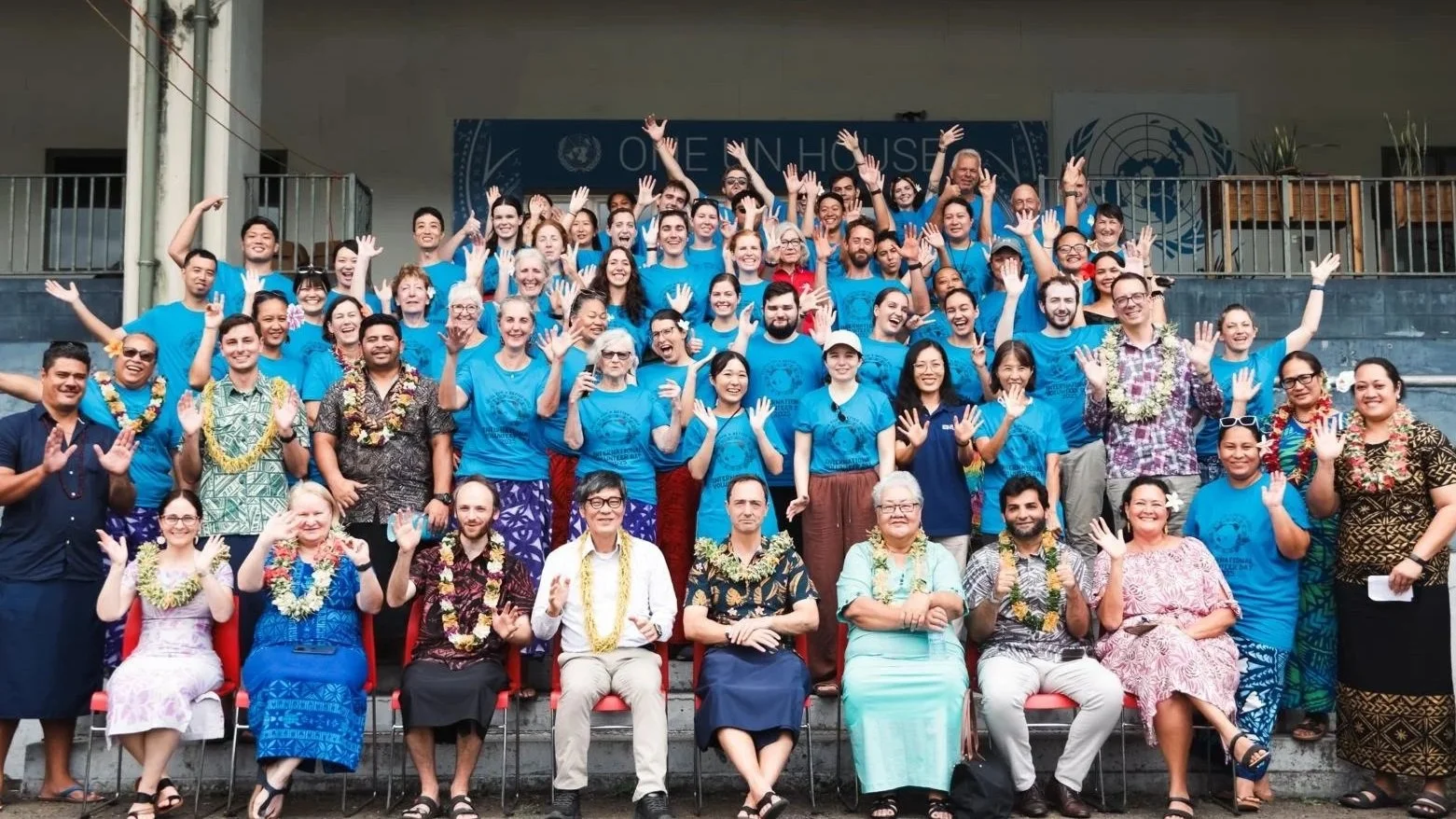
Just a random picture I love from National Volunteer Day in December at the One United Nations House with some important Ministry and embassy members and various international volunteer groups.
Well, well, well. I never thought I’d see the day when I would sit down and actually write this blog entry. But in the wise words of my first love, Justin Bieber, never say never.
To be honest, I’ve pushed this one off for so long because I don’t know where to really start. I guess the gist of it is: Peace Corps is hard af!!!!
They say that, you know, “them.” Those who get through service and say, “It’s the hardest job you’ll ever love.” As an outsider, when I was still in my American bubble, I used to think to myself, What does hard even mean here? Like okay, no air conditioning? Food’s a little different? Get a little dirty sometimes? Cell service is bad? Have a hard time with a language barrier? You miss a wedding or two? Or maybe a few birthdays and holidays that give you some FOMO? That’s all stuff I’ve experienced before and survived unscathed, so I thought, Ya, I can do this.
Obviously, I knew it was a little more nuanced than that, but navigating uncertainty, forcing my control-freak self to go with the flow, and slowing down more were all things I figured I could still handle. It’d be good for my character development.
I thought.
So I went into training, everything was sunshine and rainbows, the people were fantastic, and my time integrating was magical. Then we all swore in, became the real deal, and started service. My aforementioned “them” friends always say that the hardest part of service is the first three months at site, so I braced myself for impact but managed to keep a twinkle in my eye and a pep in my step. And let’s just say that my naivety, which usually keeps me optimistic, has not played to my benefit like I had hoped.
Literally nothing could have prepared me for these last three months of my life. Despite some of the harder times that I can’t really describe much in this blog, I’ve actually had a lot of fun times too, which this blog will talk more about. I’ve grown a lot, learned so much about myself, and pushed my comfort zone farther than ever before.
Host Family
As I mentioned before, in the Peace Corps Sāmoa post, all Volunteers were required to stay with host families in our assigned villages. The place of work—schools, offices, etc.—requested a Volunteer, and then, when a Volunteer placement was confirmed for that workplace, Peace Corps local staff worked with the village council to place us with a family willing to host us for our two-year service.
The Peace Corps gave us money monthly at the rate of the local living wage, and we gave some to our family to support our water and electricity usage, as well as our food if the family cooked meals for us. Then, we used the rest to buy groceries or make varying purchases at our personal discretion.
I had one family during training on the main island of Upolu. I was placed with a second family in my permanent village on the other island of Savaiʻi during a trial visit and then was soon moved, due to medical reasons, to a different permanent village on Savaiʻi closer to a hospital. There, I stayed with my third host family for three months. About a week into JanuaryI found out I had to move again and am now waiting to be placed with my fourth—and hopefully last—host family, that would be back on the main island of Upolu. Over those three months, so much happened, and I took so many notes of funny, crazy, cool, and hard things. So, below, I will be recapping those experiences with my third host family on Savaiʻi. For ease, clarity, and privacy, I will not be using their names but simple descriptions.
For a recap from the last blog, here’s a little non-visual map of my house for you.
At host family number three, I had a main house with a big living room where my family slept together on the floor, chairs and couches along the walls, a hallway that led to a bedroom full of the family’s bedding, a bedroom that had suitcases full of the family’s clothes, my bedroom, the bathroom, and a shower room with a laundry machine.
Behind the main house, there was an open fale, or house, where our laundry dried without the risk of getting rained on. Next to that was the old house from before the main house was built in 2018. It was then just where guests stayed and where the family’s icebox was.
Behind that was the kitchen. For being a fully outdoor kitchen with a sand floor and full of bugs regularly, it was always actually super clean. Well, as clean as it could be.
Behind that was where my family dumped all their trash and also grew banana trees. Don’t worry, I threw my trash out in bags with the trash service weekly after I found my youngest host brother playing with my tampon applicators because he thought they were toys.
My host mom was 49, and my host dad was 42. They were both very funny and laughed at my jokes at dinner (when they understood). Neither of them had jobs and, despite being registered with the Mormon church around the corner, were not acting Mormons. Together, they had 13 kids, two of whom they informally adopted after one of my host mom’s sisters died.
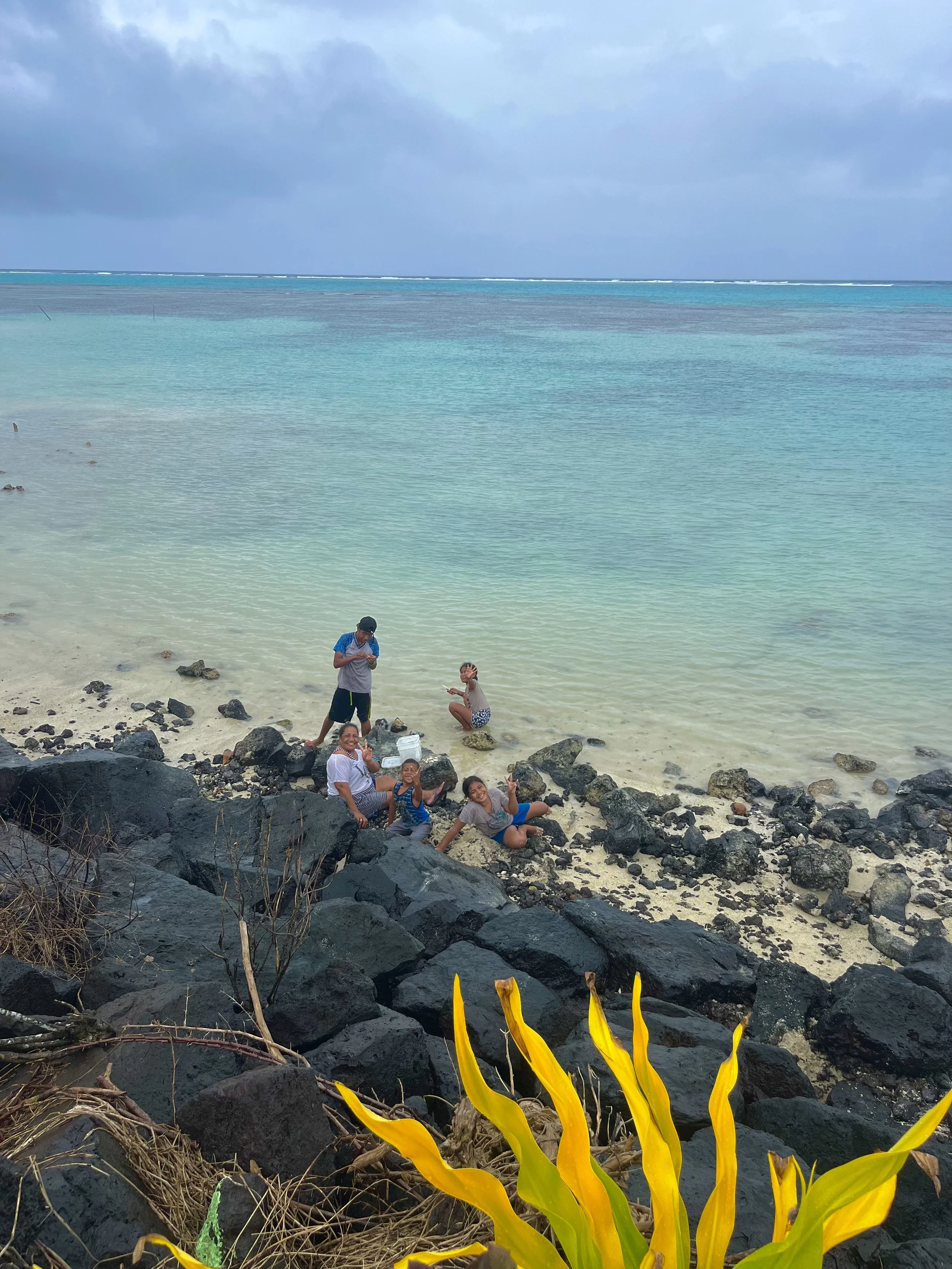
My host mom and siblings looking for pi'i pi'i snails to eat for dinner after we had a fun day swimming.
The language barrier in this home was one of the most challenging things I have dealt with in my entire life, so sometimes the varying levels and types of translations made me laugh. For example, when I asked my host parents about their kids’ names and ages, they best described it as having “stepchildren.” Boy, did this make me confused. After hours of roundabout conversation and pantomiming while trying to map out the family tree, I realized my host mom was saying all 11 of her biological children were born one after another “like stairsteps.” My jaw still drops to the floor when I think about that.
The five youngest kids lived in the house regularly and were the ones I spent time with.
Host Brother 1 was 14 years old, shy, artsy, and really struggled with English, but smiled and said hi to me every time he passed me.
Host Sister 1 was 12 years old, and I connected the most with her. Her English got very good just from exchanging translations with me every day, and she was always very helpful to me and her parents. She also laughed at all of my jokes. We liked to gossip together, tell each other stories, and watch movies on my computer.
Host Sister 2 was 10 years old and was the fiery one. She had the cutest smile and the personality of a firecracker. Her English also got good just from listening to me and picking up on words and phrases I would say, like “chill,” “poh-tae-toh, poh-tah-toh,” or “winner winner chicken dinner,” which she later helped me teach to my whole family. She was always respectful of me and gave the best hugs.
Host Brother 2 was 8 years old, and I always made jokes about him going off and hanging out with his “second family” because he was never home and always got in trouble for being with his friends all day. He was also a wild child but gave me a hug before bed every night, which always made my day.
Host Brother 3 had just turned 7 years old, and he was the funniest. He was always dancing, always climbing on stuff, always playing with random trash in the yard as his toys, and always wearing shorts that were literally hanging together by a few threads. He sat next to me at dinner every night, and after our prayer, we would put our foreheads together and make silly faces at each other until our host mom told us to stop and eat. He thought he was the best at English, but he couldn’t even say “hello.”
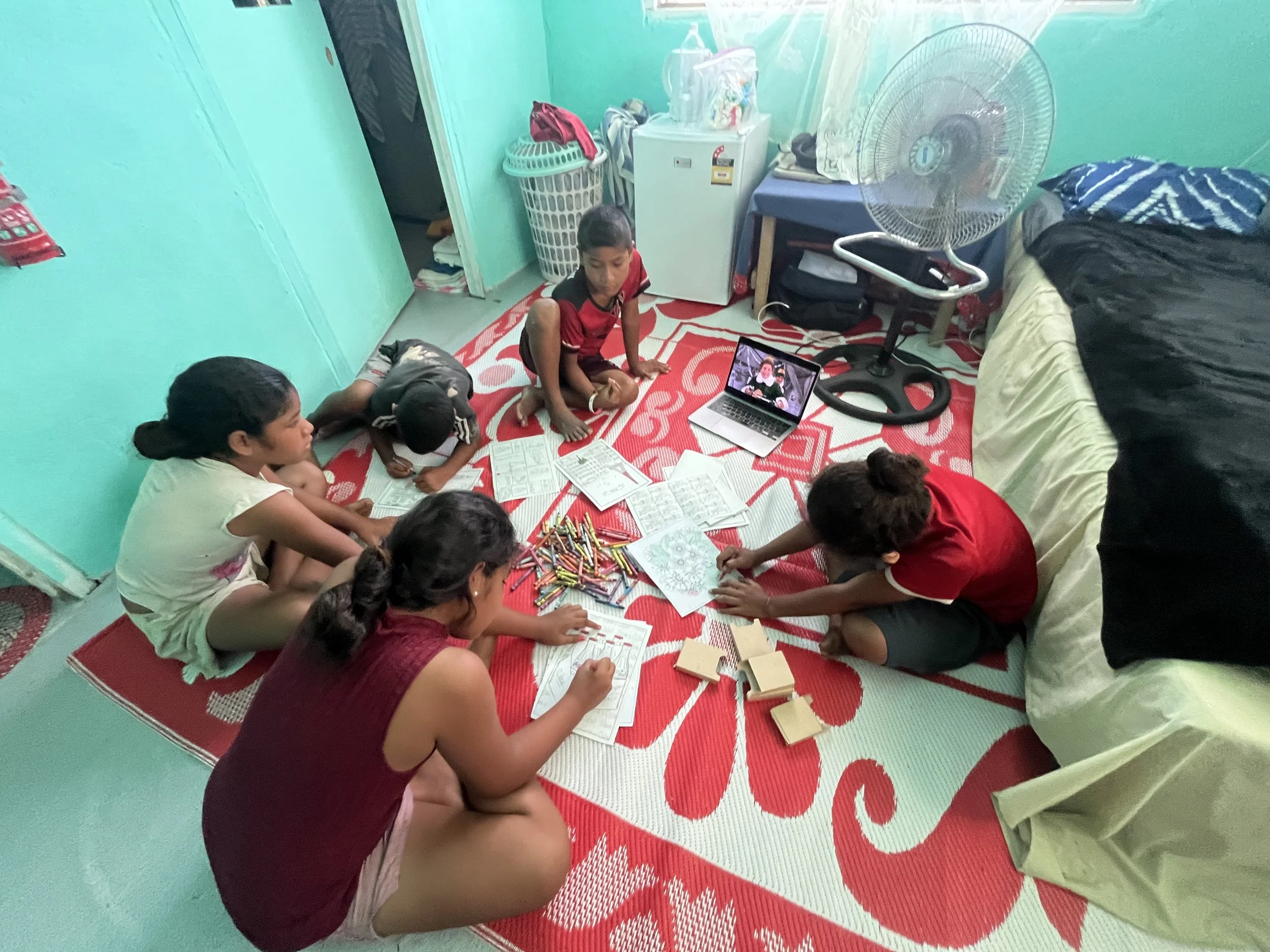
My siblings coloring and watching the Elf movie in my room on Christmas Day.
Below are a few random anecdotes I wrote down either because they shaped some of my perspectives about the culture or because they were just funny and random. Or both.
My host dad walked five hours to his brother’s house one day, chopped down a tree, carved it into a boat, and then brought it home, all before dinner time. He took it fishing that night at like four in the morning during “the great palolo migration,” which happens once a year in October when these weird worm things snap themselves in half and the bottom half swims to the surface of the ocean for reproduction. Or, I guess in this case, gets snatched up by a very determined and hungry Sāmoan man ready to have a few meals of cooked worms in bulk for his family.
ABBA and the Mamma Mia! franchise were more important than anything to my host siblings. Songs were sung nightly in English and Sāmoan. The first movie played on their cable network at least once a week. The rare few times I was ever asked a question about myself by anyone in my host family, I would be asked something like what my favorite song or favorite color was, and I would have to relate it to Mamma Mia! for them to understand or react at all to my answer. When I told my kids I could connect my computer to their TV in the living room so they could see a second Mamma Mia! movie, you would’ve thought I had just told them they won the lottery.
When I came home from school, I usually went to the back of the family’s property, where the outdoor kitchen and dining area were and where everyone hung out. My host parents were always doing some side project that made me look twice. One time, it was cutting up a chair from the furniture set inside to use the foam padding as new dish sponges. Another time, it was stuffing their pillowcases with this fluffy flower falling from the tree above the kitchen. A different time, it was watching my host dad try to give himself a haircut using our broken-down car’s sideview mirror, which he pulled off to use as a handheld mirror to see the back of his head.
The homework for the curriculum used in the schools was just way too hard for the pace at which kids were actually retaining the information, and it made for these weird knowledge gaps throughout the grades. For example, when I helped my kids with their work after dinner, I realized that my smartest sibling was able to solve complex algebraic and geometric problems but didn’t know what “less than,” “more than,” or “between” meant or that they were synonymous with the < and > symbols.
Like I briefly said, every family member in my house was a registered Mormon at the church around the corner from my house. I was told by staff not to drink or smoke around them or even tell them I did those things. I was also told to be very modest in the way I dressed around the house. Every night during my first two weeks at site, my sisters did evening lotu, or evening prayer, where they sat in the main house where my room was and sang songs and said prayers for 30 minutes. I started going, and then after a few days of adjusting and setting up my routines, I would end up taking a nap, having a meeting, or forgetting to do this activity. Eventually, so did my sisters, which I thought was weird. Only then did I find out that no one in the family did lotu before I arrived. My host mom and dad were also always conveniently sick or too busy cooking to actually ever go to church with my sisters and me. My host dad also drank beer. Everyone around my house also only wore shorts and tank tops. This threw me because I was prepared and eager to learn about a new religion and possibly find a community through church. But over time, it was nice to never be pressured to do or wear something I didn’t want to. I know that’s like the whole point of the Peace Corps, but at the time, it was very nice to not worry as much about those things since integration was already so hard.
My host dad and his brother smoked cigarettes but never had money to buy them. Instead, they had these specific plants around their houses where they picked leaves and dried them in the sun until they could crush them into a grainy consistency and keep them in small plastic bags in their pockets. They also found pieces of paper on the street or used old wrappers or receipts as rolling paper to put the leaves in and roll into cigarettes that my host dad smoked hourly. He liked to say, “It’s healthy having no money.” At least I think that’s what he was saying. He didn’t speak English. I got very good at smiling and nodding.
One of the crazier things that happened with my host siblings was when they would sometimes get into fights with other kids in the village and come home crying or bleeding. I would be the one to hug them, clean them up, and calm them down. I taught them that whenever they were sad or hurt, they could go to the bathroom, breathe in and out slowly a few times, talk about the situation, wash their face with cold water a few times, pat dry, and then sit down until they felt better. I always hated seeing my kids sad, but it always made me feel better that they wanted my comfort and saw me as a supportive figure in the house.
One day when I actually went to church, I walked into the bathroom and saw Host Sister 2 and our neighbors using a red ink pad they had found on the floor as lipstick. They rubbed this ink all over their faces like makeup and were still stained red the next day at school.
Whenever my host siblings lost a tooth, they threw it on top of the roof of our kitchen for good luck and for the mice to collect. It was some “ancient Sāmoan myth and tradition”??? When it rained hard, I could hear the teeth moving around and rattling on the roof.
One night at dinner, my host dad, out of nowhere, asked me why I had white skin and why he had brown skin. I sat there for ten minutes trying to figure out how to describe race to a man who didn’t speak more than 20 words of English. That conversation ended with him telling me to get more sun to turn brown. The next day, I unintentionally got more sun to the point of sun poisoning, and my host dad said I had to stay in my room because I was “too white for the Sāmoan sun.” Every day, there was so much to unpack, and I just learned to stop trying to explain or reason with everything.
My host mom moved the furniture in the house around once a month “just for change,” and I thought it was funny because I had never seen anyone else in my life do that other than my real mom in the States.
There was little sense of saving or budgeting. If money existed, it was meant to be spent, shared, or given back to family. Children were raised with the expectation that their future paychecks would support their households, which added a whole new layer to being welcomed in as a “Sāmoan daughter.” Navigating generosity, obligation, and financial boundaries was one of the trickiest adjustments—less about dollars, more about understanding what money meant there.
Host Site
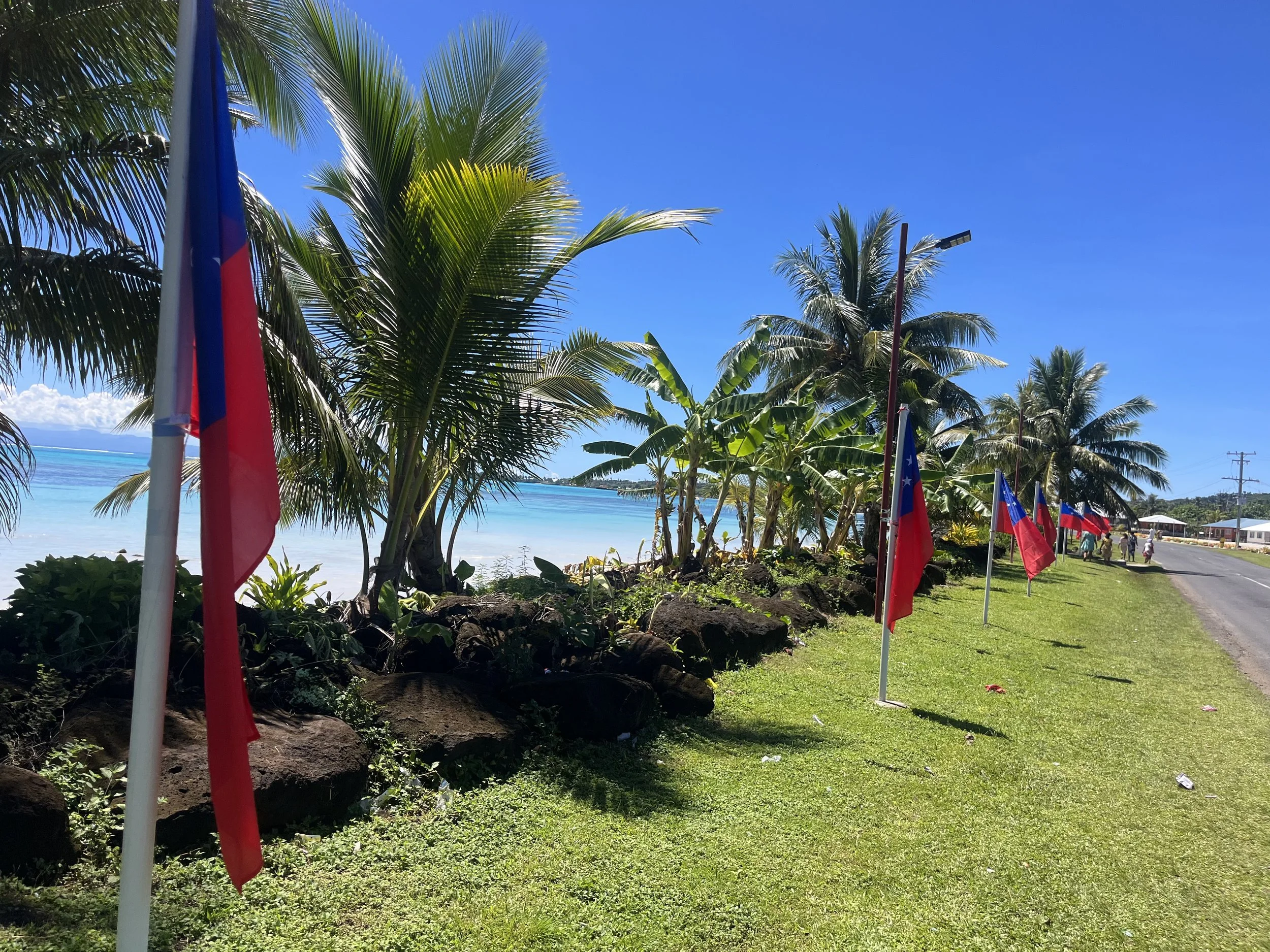
My view on the walk home from the grocery store.
Not only did I love my weird little host family, but I loved their actual house and my village’s location. It was one of the larger, more developed villages on the island of Savaiʻi. The main road—there was only this one road that went around the entire island—ran straight through my village, so it was easy to catch a bus to town or see my friends. On one side of the road were large front yards of sand and palm trees framing each of the houses, and on the other side was a tall barrier of rocks leading into the ocean. I got into the routine of waking up early in the morning to run along this seawall until I hit the large, fancy beach resort, where I would stop to watch the sunrise, then run back to shower and get ready for school. Most of my friends’ villages were not right on the water or as developed as mine, so I was really grateful to not only like my family and my school, but also my actual village. Below are some more little anecdotes about my family’s house or the village that I always found myself being grateful for, or things I found very unique to the Pacific Islander vibe.
After school, I mainly walked home with the kids, but some days, when I stayed later for whatever reason, I walked by myself down by the water. It was one of my favorite things I got to do: just look for shells, walk in the water, and have a minute of quiet.
Some of the shells I found were giant clam shells, and I took them to decorate the house or my room. The biggest one I had held all of my earrings.
One of the best moments I had with my family was the night it rained so hard while we were eating dinner that I thought it was a Florida-level hurricane. In a brief lull in the rain, I went to shower when my siblings came to my room sopping wet and asked me to come play. I gave in, and we all went outside in our clothes, where they taught me how to skimboard on cardboard box scraps. We were up to almost our shins in water, just wrestling and running around.
I purchased a large dresser, a desk and chair, and a mini fridge, and they really made my room feel comforting. There were a few of us who bought all this stuff, and there were some, like Gus, who actually MADE it all from wood and PVC pipe. Legend. I justified the posh core-ness of buying everything because, if I was going to be there for two years and had that type of access, I would indulge just to do whatever I could to make the adjustment easier. But where I thought buying these comfort things would make me feel better or make my time easier, it actually made some things harder. The main thing was people in my village or my family thinking I had all the money in the world to just shoot out of a confetti cannon—which I did not have. The money nor the confetti cannon.
My first host family during training had a nice bathroom with a shower, but the town’s running water system was unreliable up the mountain. This host family always had running water from their own tanks. It was so nice. It was a little PVC pipe shower in the bathroom, but the pressure was great. During the day or as the sun was going down, I could take hot showers since the sun had heated the tank all day.
Our laundry machine was also great. It was a little portable one with a pretty large washing unit and a small spin-dry part, like the ones you use for bathing suits at a gym pool’s locker room in the States. I still line-dried my clothes, but it was nice that my family and I didn’t have to fully bucket wash.
Because I lived in a big, more developed village, people came from all over the island to this house down the street that I used to call the “bingo hall.” Bingo night was a BIG thing there, and it was INTENSE! When my host mom had money, she went because it cost 20 tala to play and get a bucket of dotters and bingo cards. One night, my sister took me too. Kids just ran around outside while the parents played. The person rolling and calling the numbers sounded like an auctioneer. It never stopped, so you always had to be paying attention. So, for someone who barely knew their numbers and alphabet, I was pretty bad at bingo and stayed back to play with the kids.
When the bingo dotters dried out, they cut the bottoms open, filled the bottles with soy sauce, and then duct-taped them back together to continue using them.
My host mom was part of the women’s committee in the village. Every Friday, they played volleyball together, and sometimes I went. It was a great way to get to know the respected women in the village. One 30-year-old woman I met was actually my neighbor and spoke great English. She ended up becoming my best friend in the village.
While playing one time, she pancaked the ball, which, if you know volleyball, you know is an extremely hard thing to do—and to do on purpose. I screamed and praised her, and she laughed and told me she always did it, but the other women didn’t know the actual rules or plays of volleyball, so she enjoyed having me around to actually appreciate her skill. Some people played insanely good, D1-level volleyball, but then some, like my mom, just threw themselves at the ball. Still, there were better volleys and more hustle than when I was playing for real in middle and high school.
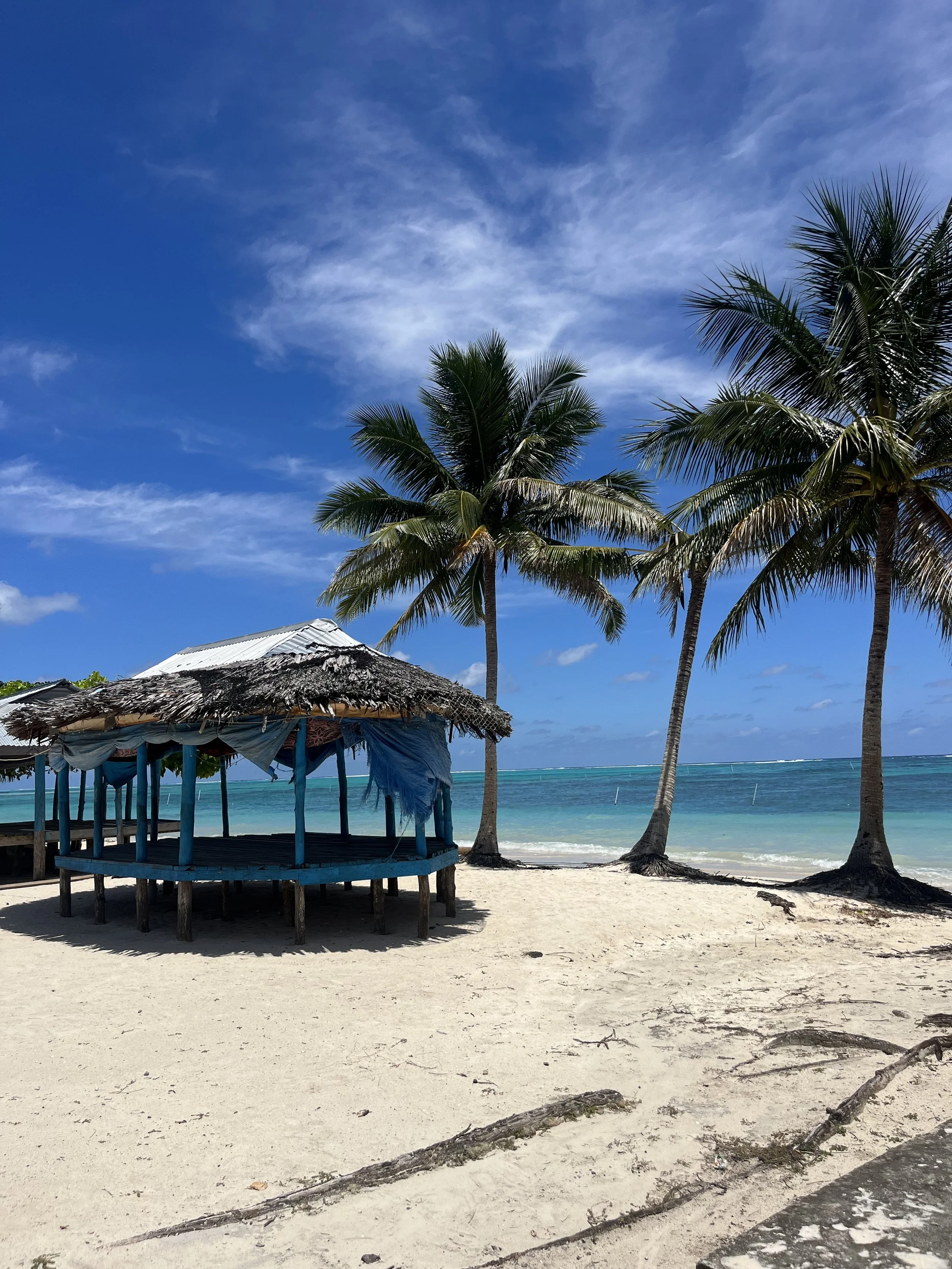
The beach I walked along every day after school. Not too shabby if I do say so myself.
Host School
I loved my school. It was just a short 10-minute walk down the street, and every morning, I had a flock of 5–20 kids join me. I had a great principal who was actually on time each day and implemented strong structure and scheduling at the school. He was harsh to the kids sometimes, but he made me feel welcome and was good to the teaching staff.
There were about nine teachers who split up classes with kids aged 5–14 and there were about 260 kids total. Every Monday morning, there was an assembly in the great hall to go over news for the week, and every Friday afternoon, there was an assembly to do song and dance practice. For what occasion? I don’t know. But if anyone ever needed entertainment, they were locked and loaded! Sāmoans are the best singers, dancers, and memorizers, so I had a hard time keeping up with these Friday practices, but the kids got a kick out of helping me join in.
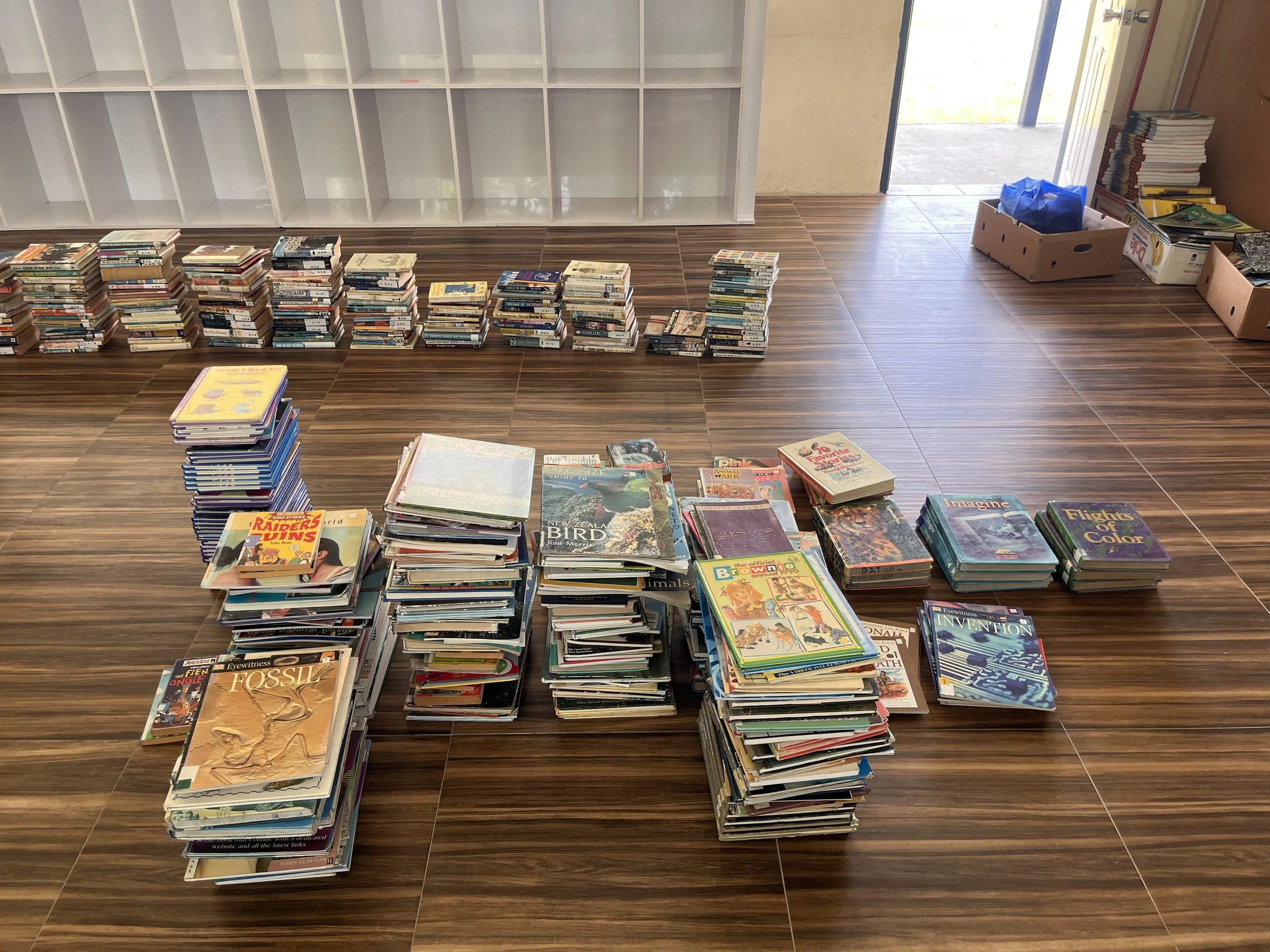
Just about 1/10 of the books I sorted through!
By the time us Volunteers were placed at our schools, there was just three months left in the school year, so we didn’t get our own classes right away. Instead, we worked on setting up our classrooms, libraries, and curriculums with our staff. I was given a room right next to the teachers’ lounge and principal’s office, and it had thousands of books across 10 new bookshelves, which was insanely lucky for me. I had fun rearranging all the shelves with the kids and having them help me categorize, clean, and place all 5,000+ books while I made the library system. I had never made a library system before, so I just followed my gut for what I thought would be easiest for the kids to understand. That meant doing color levels based on how many words there were per page instead of categories like fiction and nonfiction. The only ones I separated out were the Sāmoan books. I opened and analyzed every other book, labeled the inside cover, documented it in my e-catalog sheet, and had the kids sticker the books and put them on the shelves. I also added posters and decorations to make the room feel more welcoming. It took me like four straight months, but it was beautiful.
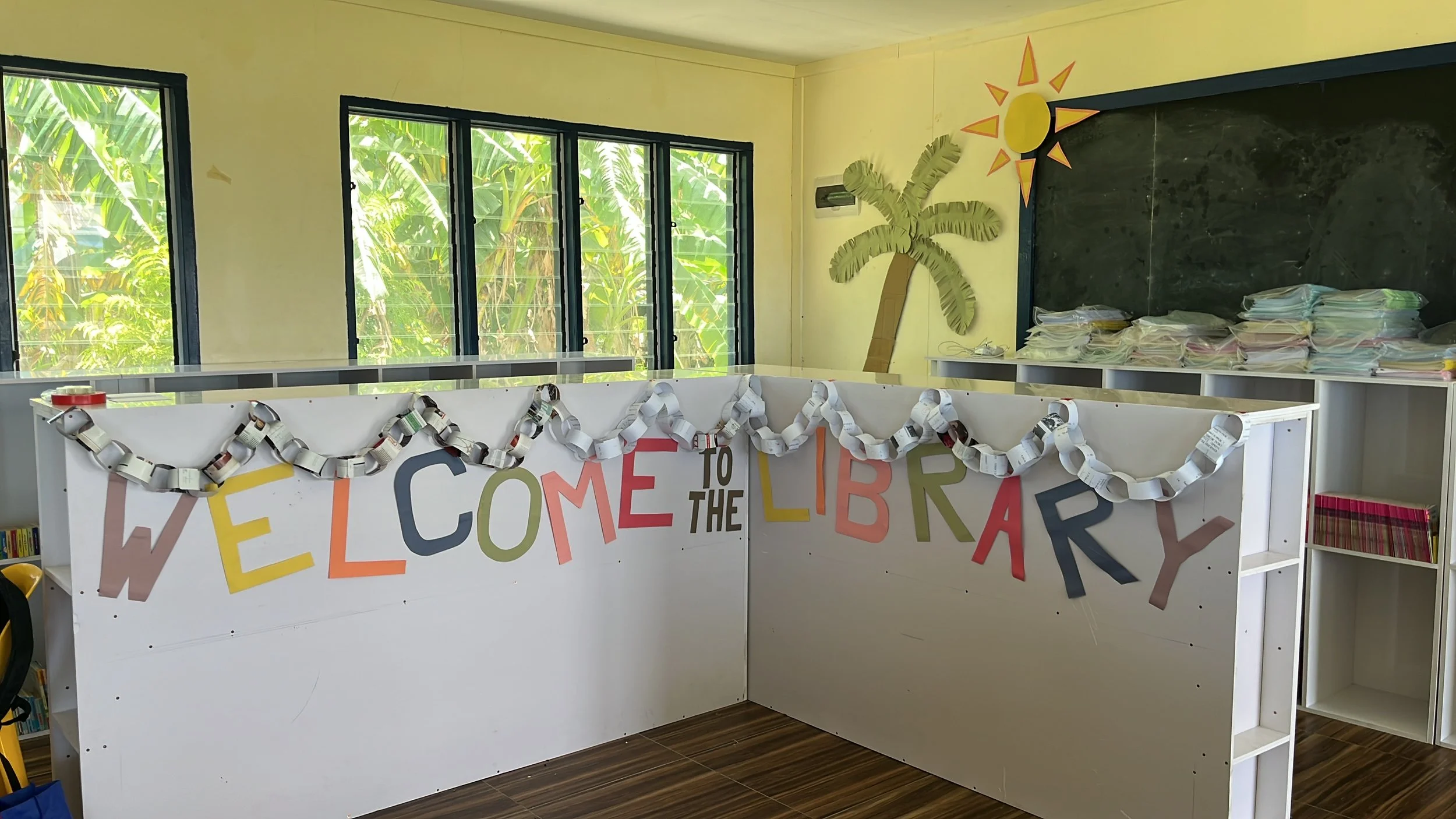
A corner of my room was feeling like it needed some color!
Integrating with the staff while I was spending most days in my room working on this was hard. They all wanted me to sit with them during lunch, but when I went, my principal scolded me for not sharing my food, and my teachers laughed about me in Sāmoan. They also just did things without ever really having much of an agreed-upon schedule or outline of a plan, so it was hard for me to ever be on their same agenda. Then, they’d be mad or surprised when I didn’t know about an activity or what they were planning. Most of that was just because of the language barrier, but it was nonetheless really hard and isolating. But where stateside Liz would normally just wallow in self-pity, grow resentment, and complain to my mom, I actually brought it up to my principal. AND IT ACTUALLY WAS RESOLVED!
I was really proud of myself for confronting the problem, listening to the explanation, and then being able to engage with the teachers when they made an effort to include me and get me out of my room for things like planning the Christmas holiday show.
This also made me more confident when I felt uncomfortable with the level of corporal punishment the principal was using with students. For an issue that was so ingrained in their societal norms and was one of the biggest cultural differences we had to navigate as Volunteers, it was a sticky situation to handle. But my principal was very understanding. He did it less to students out of respect for me and was open-minded about learning new methods of discipline for students acting out of line.
Now, I didn’t fully stop him by any means, but being able to have a conversation and push both of our understandings was a very valuable moment for me and this experience.
A quick random anecdote I thought was funny and wanted to mention here was about the prizes they gave out at the awards ceremony at the end of the year. They obviously weren’t gift cards, money, or raffled activities we might get in the States. They were actually necklaces of eggplant, chips, and candy. And the big prizes for the top of the class in varying subjects were things like kitchenware and appliances. Things for the families, rather than just the kids’ enjoyment.
Weekends
On the weekends, it was easy to want to stay in my room in front of my fan and not do anything. But sooner or later, I would go crazy and realize I should really go outside and integrate. It may sound silly, but it really was hard when I was pushing myself mentally so hard all week. Still, I always felt better after I did it, even if it was something little like just sitting with my kids.
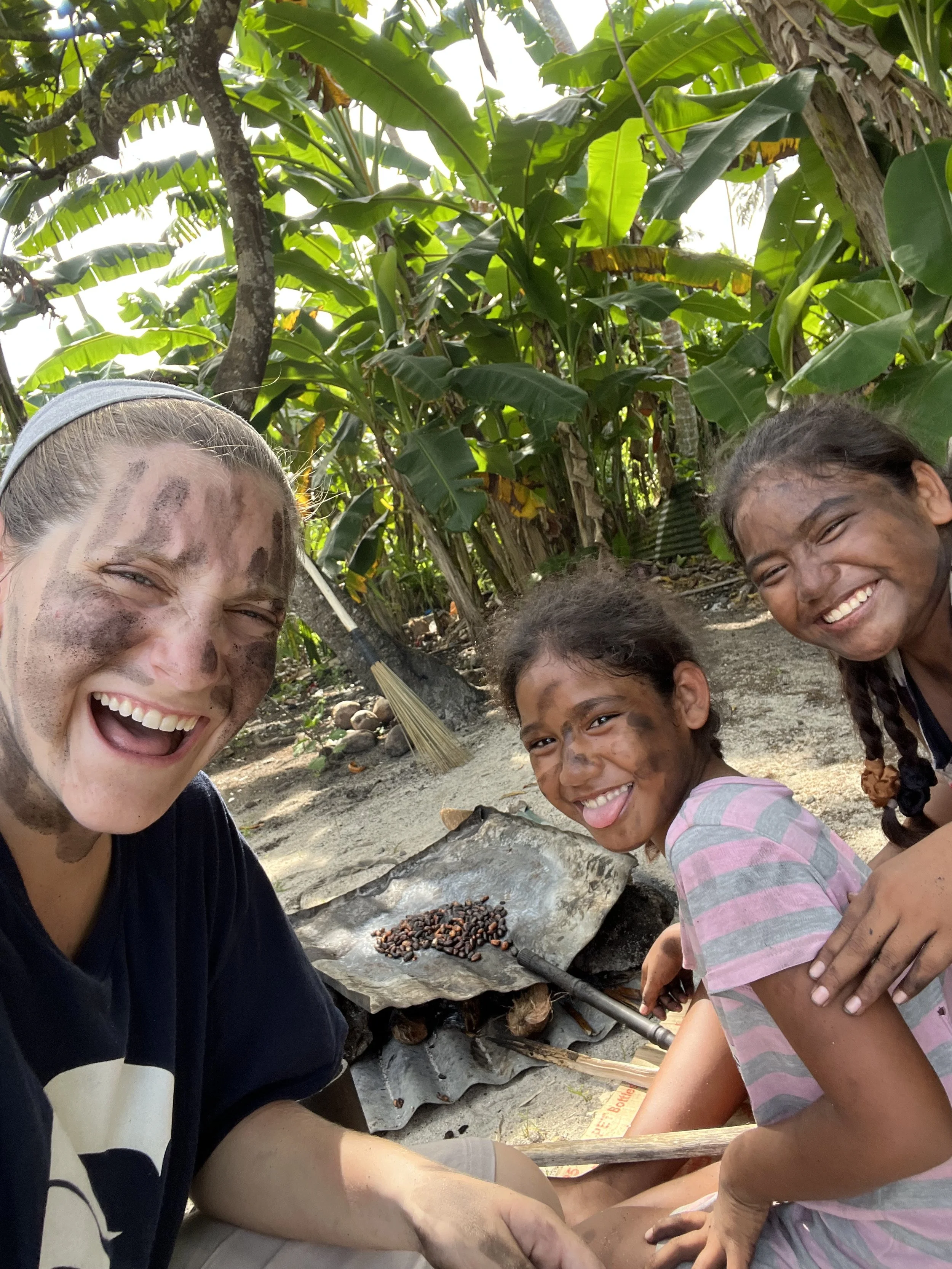
Helping my sisters make Koko Sāmoa and getting messy in the charred shells the way they used to do with their older sister when she lived at the house.
When I wasn’t hanging out with my family, some weekends were also spent recapping and recharging with my fellow Volunteers. My placement was nice because I was very close to three other Volunteers, so we sometimes went grocery shopping together in town or treated ourselves to a nice lunch somewhere to see each other’s villages or a new area of the main town. To celebrate each month at site, our little foursome went to the resort in my village and got a nice dinner too.
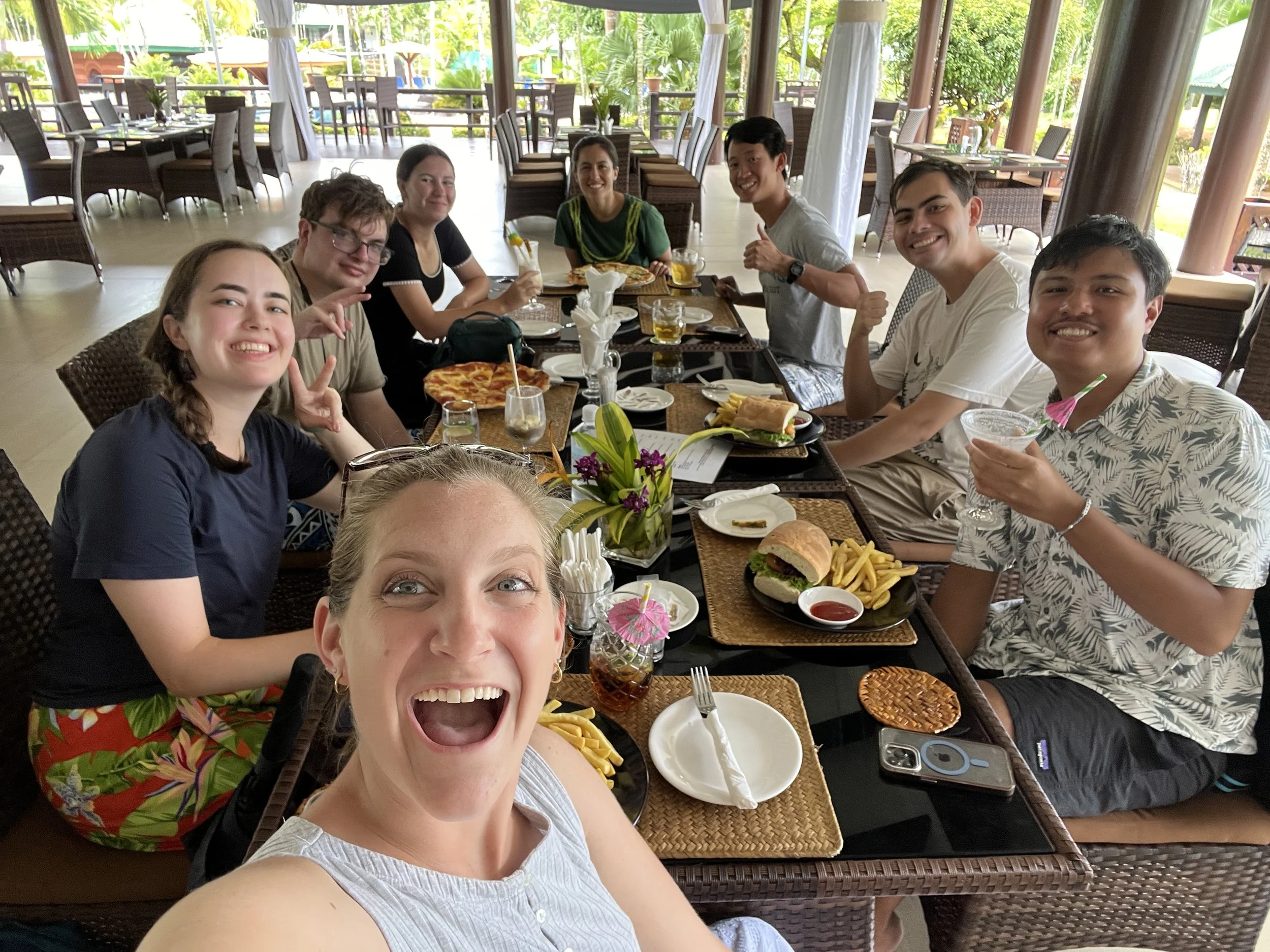
Lunch at the resort in my village for Friendsgiving with some of the Savai’i Volunteers.
Food
In addition to the language barrier, the food was one of the hardest adjustments.
Sāmoans ate a lot of meat and starch. That’s why they’re so big and strong. But that meant very little to no fruit, vegetables, or really any variety, even in the meats or starches. It was almost always pork, turkey tail, fish, or chicken, with rice, breadfruit, or taro. Any and all of that could be combined with plantains and coconut in some way. Since we lived on the water, my dad fished at night and brought home anything that had gills. He took his canoe a few MILES offshore and went spearfishing with a yellow pole that he sharpened on one end and tied shreds of old car tires together to make it slingshot into a fish.
He caught like 50+ fish in a four-hour night out.
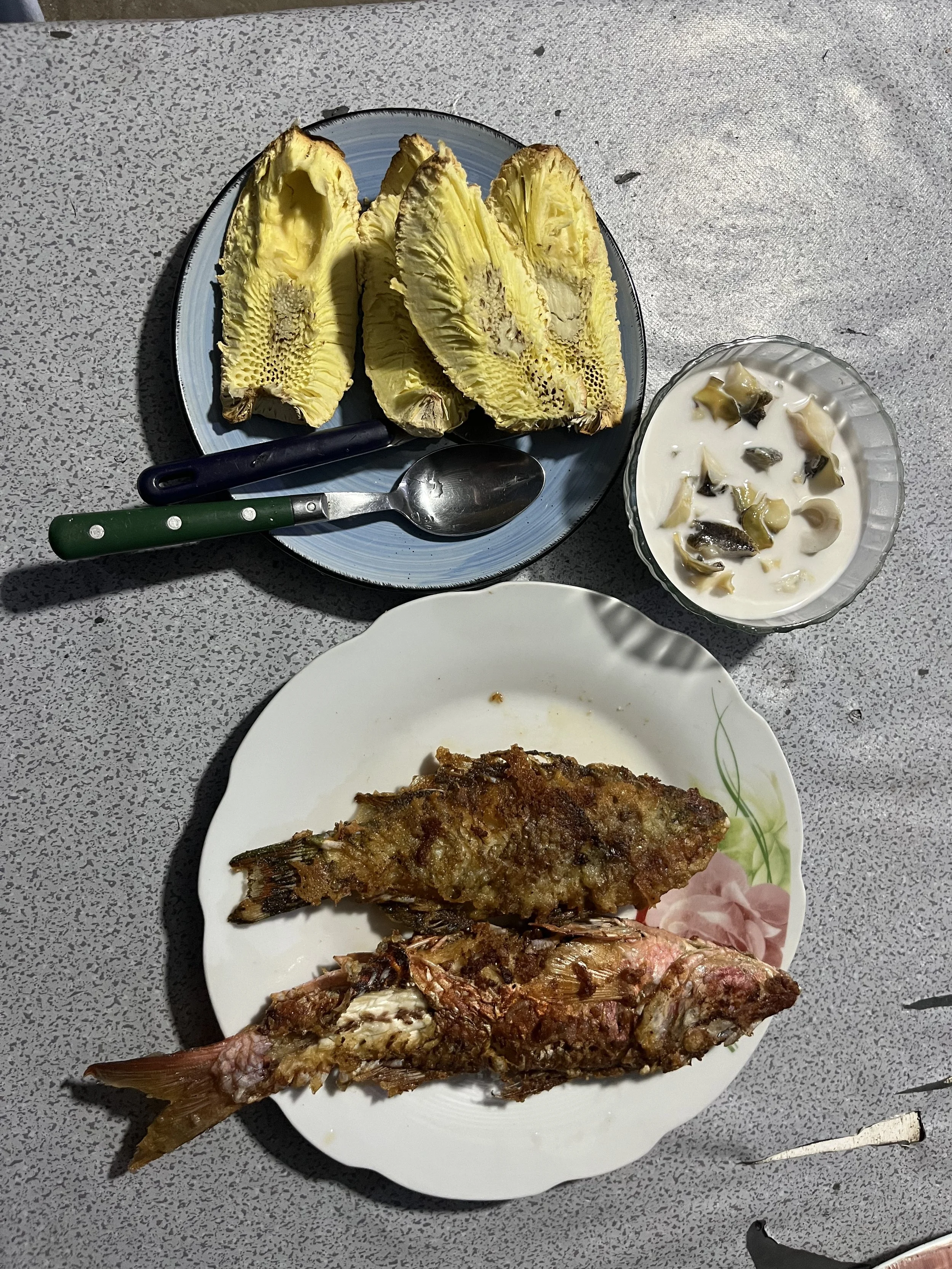
Breadfruit and some fried reef fish with a giant clam coconut cream soup.
He kept them in the icebox and, every night, washed a few off in the sink, descaled them, and fried them whole. It was a tedious, messy process eating those meals, but the kids appreciated my “Pela’s leftovers” bin, where they could scrape every last piece of meat off what I didn’t eat.
I also became very grateful for the flavorful food at home and happy that I had a stash of some comfort items I brought with me. Like a box of pasta salad. I made it in the kitchen one night, and the whole family freaked out. They were infatuated with the fact that it came in a box that had instructions, recommended meals to make with it, and pretty pictures.
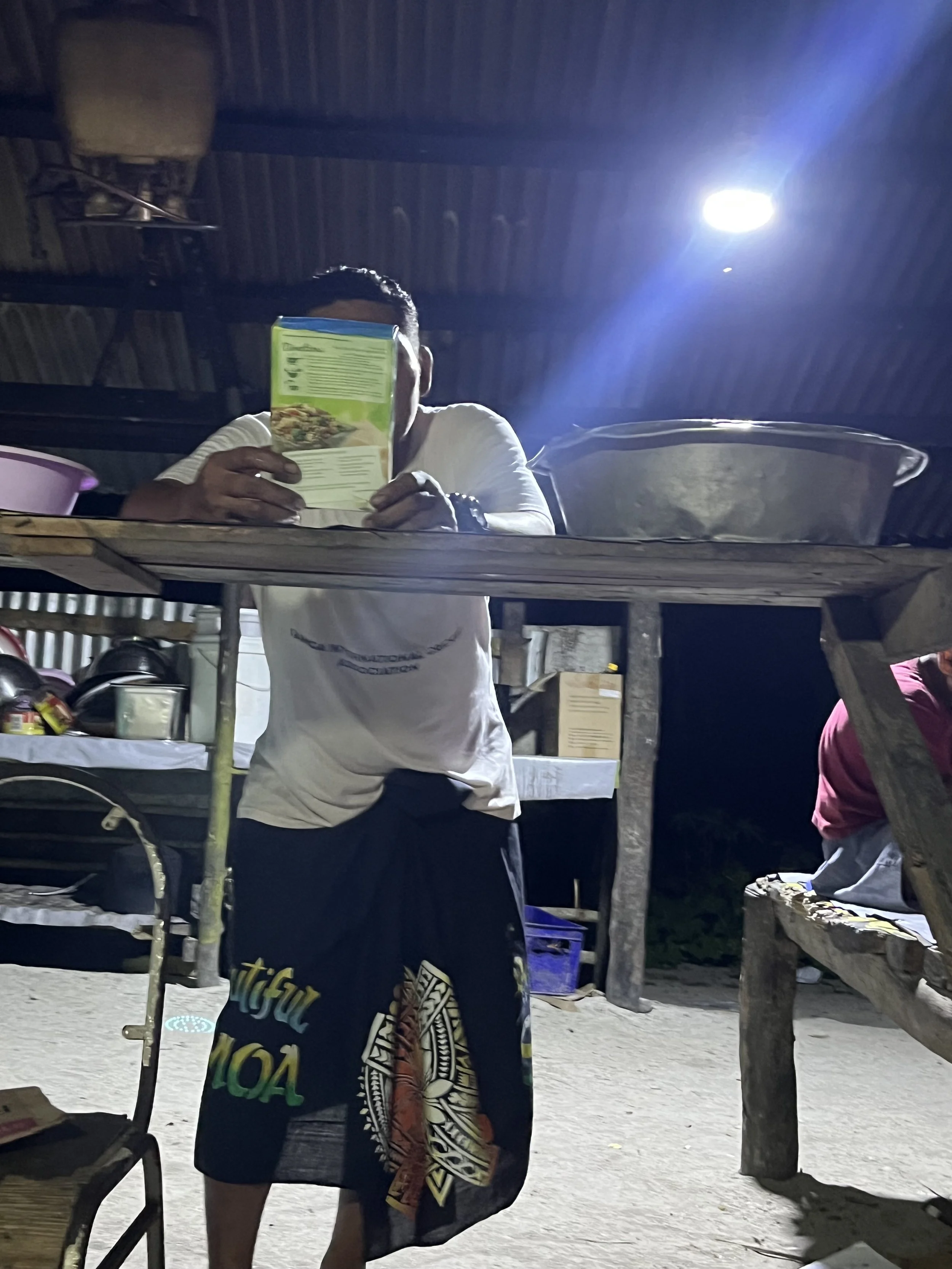
My host dad stared at this pasta salad box for about 30 minutes before my brother literally slept with it and took it to school to show his friends the next day.
But on the nights when I complained to myself that the food was plain, oily, or hard to eat for whatever reason, I always made sure to be grateful that, at the end of the day, I had a family willing to cook for me, share that part of their culture, and, ultimately, have the resources to do so. And that it was CLEAN. And that I never got sick from the food or from a lack of food.
Health
I may have never gotten sick from the food, but I did get sick monthly from either sun poisoning or just being around the kids at school.
It was like clockwork. The first week of the month, I would run a slight fever, have some other crazy symptoms, and have to catch a ferry into town to get checked out, eat a burger or salad, and then I’d feel better.
It was the worst when, one month, I had a 103-degree fever for three days. It was so bad that I had to take a taxi to the other side of the island to get a dengue fever rapid test from another Volunteer. When it came back negative, I had to go to the hospital for a series of other tests that all came back negative. So I blamed it on the sun
The sun was just too strong.
I thought being from Florida would benefit me, but boy, did I underestimate the impact the small difference of distance between the equator and Florida versus the equator and Sāmoa would have. Getting into running, actually drinking more water, meeting with a mental health counselor in DC, and having such attentive staff really helped me through all those times, though.
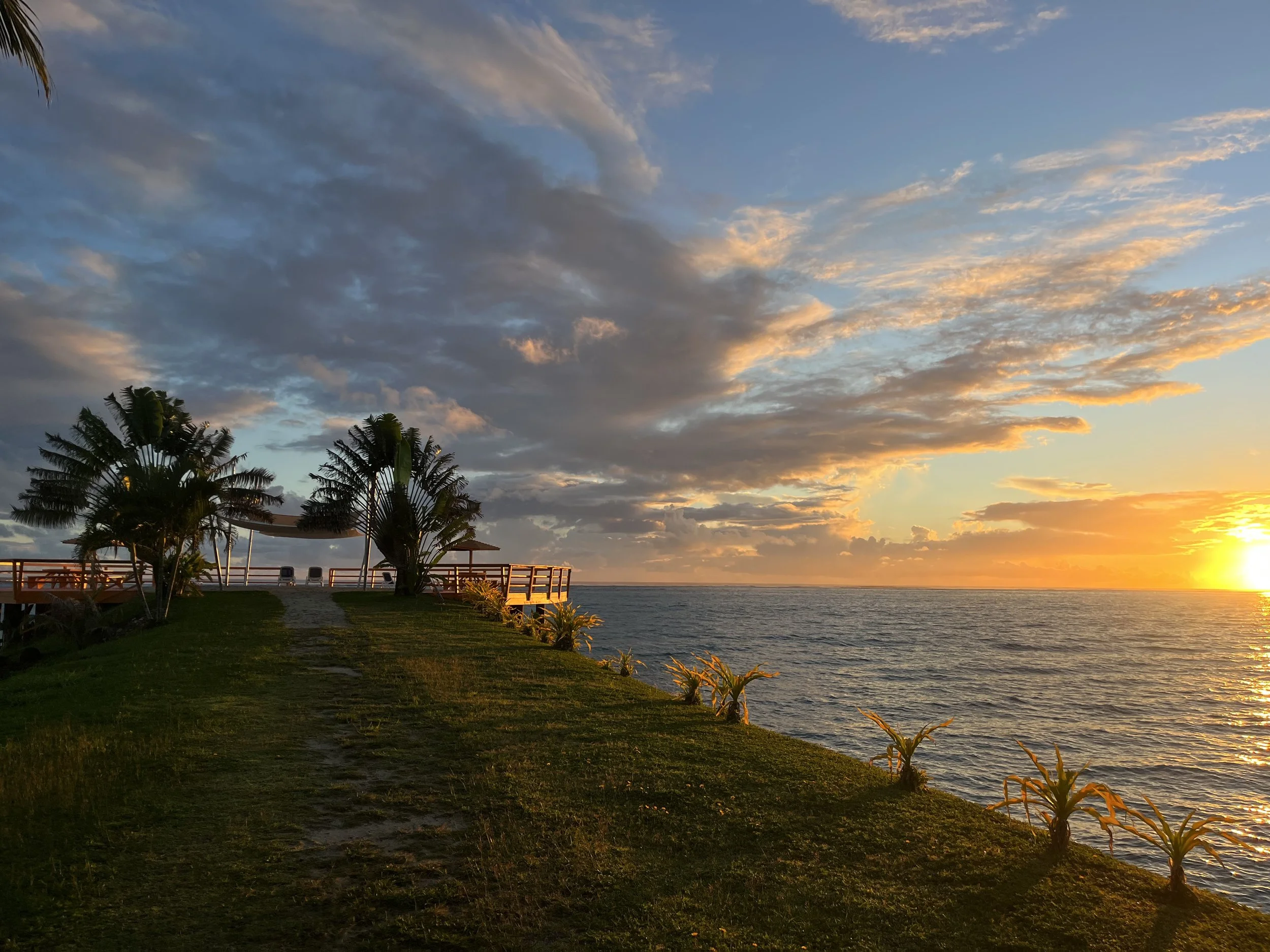
It’s like a Bachelor or Love Island set! Beautiful spot I used to run to to watch the sunrise.
Moving Forward, Literally
Due to all my physical health… adjustments… my mental health started to be affected. So, the doctor team helped pair me with a counselor in DC via telehealth just to meet once or twice a month and check in. One day, I had a call with this counselor, and after I told her a few stories about my struggles and some things that happened with my family and school that I can’t really discuss in my blog, she gave me a solution I didn’t really want to hear.
For what I thought was going to be just a simple listening ear, this counselor basically told me I was in denial about loving my site and was dealing with too many struggles that were not normal for Peace Corps standards.
Again, I can’t really disclose much of what happened, but just know it was more than homesickness or language struggles. It was more along the lines of money issues, physical boundaries being crossed, and gnarly behavior between my parents and my siblings whenever I left the house.
For only being at this site for three months, this counselor didn’t want to find out what would happen over the next two whole years. So, her solution was to call my doctor team and recommend that I be moved to a new village. To say I was shocked and devastated would be an understatement. I called my doctors immediately after this meeting and said, “This counselor is going to call you, and whatever she says, just know I disagree and want to stay.” Luckily, this team and I were super close, and they were supportive, so they reassured me everything would be fine.
A week later, I got a call out of the blue from the head doctor telling me to pack my entire room and get on the earliest ferry the next morning.
I had disclosed information to just a few people: my friends, my counselor, and the Safety and Security Manager, who I was also very close with. He was out on leave and hadn’t properly reported information regarding my situation, so my doctors were very caught off guard to hear about certain behaviors I had been tolerating at my site. They said it was a very toxic living situation and recommended that I fully Irish goodbye. After about three straight hours of crying, I conceded and packed all my bags.
I called my family in the States to seek comfort, and my sister, who had just learned to read tarot cards, read mine regarding this situation and my future. She pulled the death card. We had a good laugh, and where I thought this was a bad omen, I later found it to be a cleansing symbol and trigger for new beginnings.
If only I knew how much of a new beginning I’d really be starting.
More Lessons
Guilt does not make me better at this.
One of the best pieces of advice I received from another Volunteer was not to let guilt cloud me or box me in. I have spent a surprising amount of time feeling guilty about wanting things that make my life more comfortable: a hot plate, a mini fridge, a dresser, a desk. Things that felt completely normal to me at home can suddenly feel wildly luxurious here. There is a strange pressure I have put on myself to prove that I can live without things. Like the fewer comforts I have, the more “authentic” my experience will be. But being uncomfortable for the sake of it does not automatically make me more integrated, more understanding, or a better Volunteer. I can appreciate and adapt to a different way of life while still acknowledging the things that help me feel comfortable, independent, and like myself.
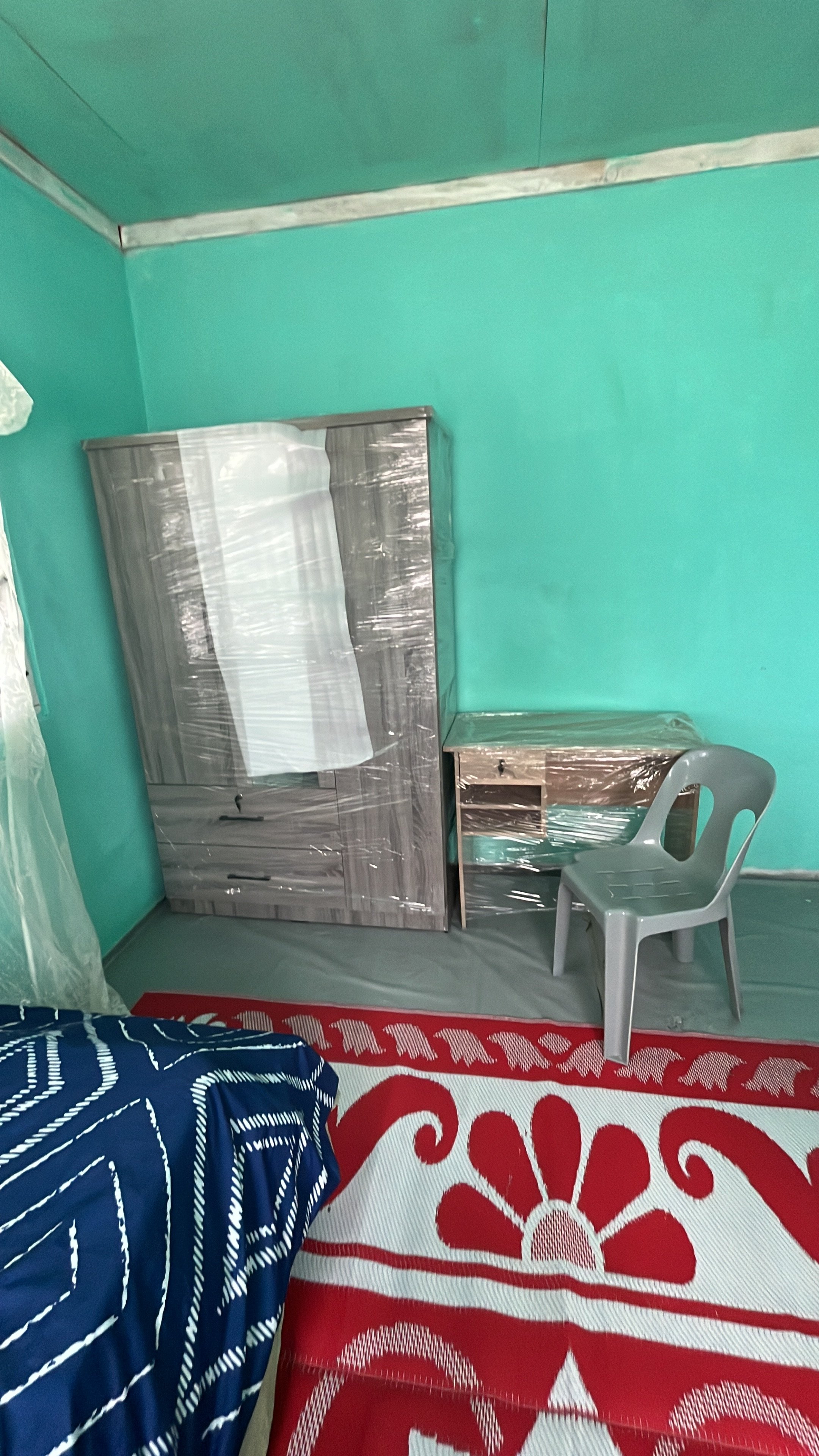
The wardrobe, desk, and chair I had delivered. Was so glad I had them at the end of the day.
I am learning how to just sit.
This may genuinely be one of the hardest things I have ever learned. I need to learn how to sit. Not color. Not make a bracelet. Not organize something. Not ask 400 questions. Not fidget with whatever object is closest to me. Not secretly make a to-do list in my head while pretending to relax.
Just. Sit.
I came here thinking integration would be about doing things: learning the language, asking questions, going places, helping people, starting projects. And those things matter. But integration is also about being quiet enough to observe. Not every silence needs to be filled. Not every process needs to be made more efficient. Not every difference needs to be questioned immediately.
A lot of my irritability I think comes from trying to maintain parts of my American lifestyle here. Not shopping or restaurants or anything like that. I mean my pace. The speed of my thoughts, conversations, plans, and actions.
If we are washing dishes, I am going to be the fastest, most efficient dishwasher Sāmoa has ever seen. If we are doing laundry, I have already created a seven-step system in my head to make sure the water-to-load ratio is the smartest. If we are cleaning, organizing, planning, or going literally anywhere, some part of my brain is screaming, There has to be a faster way to do this.
And maybe there is. But that doesn’t mean it is the better way.
For most of my life, I have naturally stepped into leadership roles. I like plans. I like answers. I like knowing what is happening next. I always thought it would feel amazing to finally be somewhere where I didn’t have to lead, where someone else would tell me what was happening and take care of me for once. Turns out, I find it incredibly frustrating.
That realization has forced me to confront how much comfort I get from being in control—not only of my own life, but sometimes of the people and situations around me.
One of my biggest areas of growth so far has been learning to stop trying to lead every room I walk into. Slow down. Observe. Follow someone else’s lead. Let things happen differently than I would have done them.
That sounds simple. For me, it has been anything but.
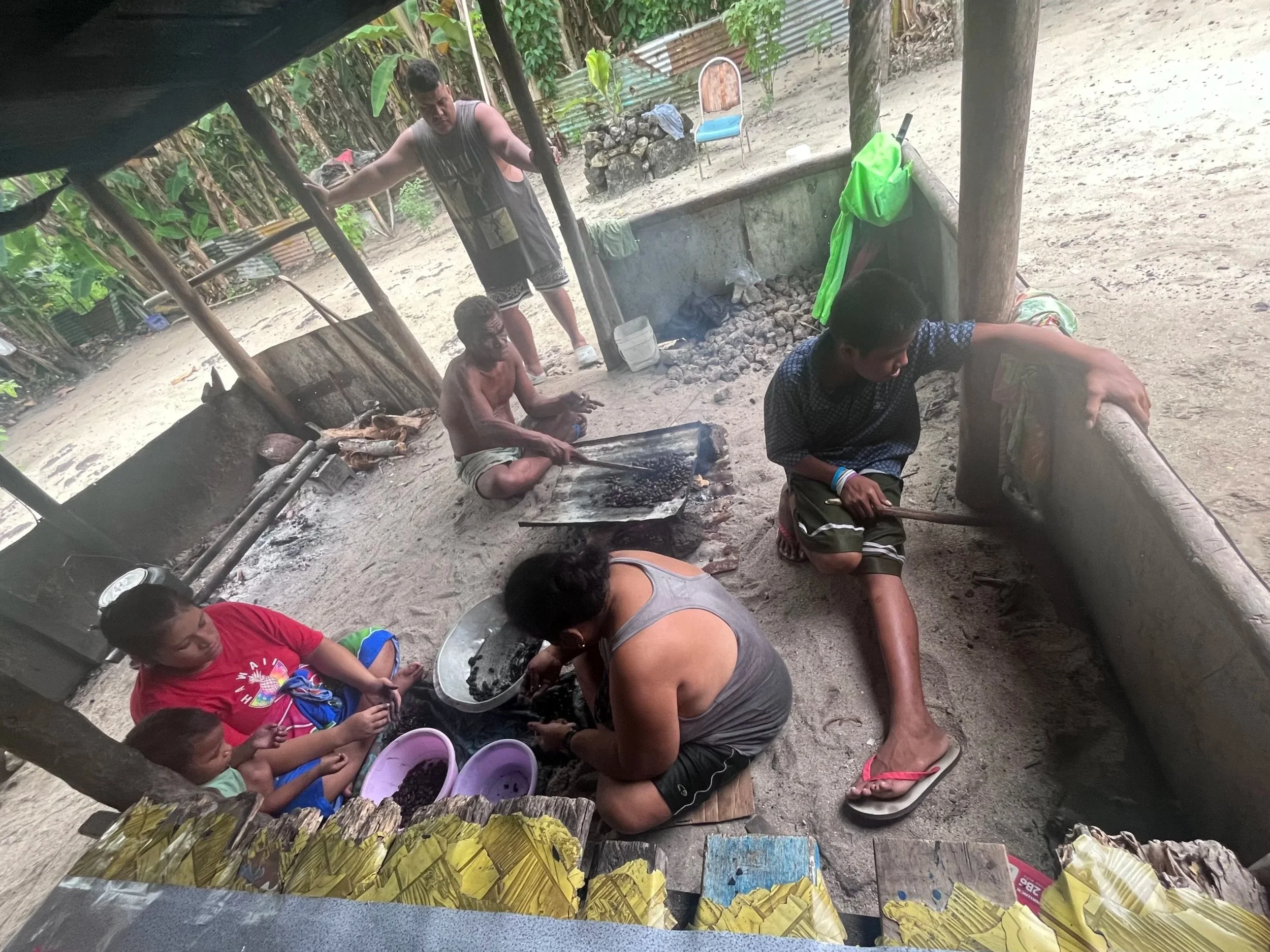
Sitting with my family in the kitchen learning how to make Koko Sāmoa.
Connection can look completely different and still be deeply generous.
I am used to connection through conversation. Ask someone about their childhood. Their dreams. Their family. Their biggest fear. Their five-year plan. In Sāmoa, I sometimes struggle because conversations can feel more surface-level to me. There are moments when I find myself craving the kind of deep, emotionally revealing conversations that I associate with closeness back home.
But then someone gives me food without thinking twice.Someone makes sure I have a ride. Someone hands me something they have because they think I need it more. Someone includes me in their family without requiring me to explain my entire life story first.
I have been using my own cultural definition of connection as the universal definition of connection. But it isn’t.
People can know less about the details of my life and still show up for me in incredibly generous ways. And it’s not just how they treat me, but how they treat their neighbors, shopkeepers, and distant family members too. Care does not always sound like a deep conversation. Sometimes it looks like a plate of food, a place to sit, a ride home, or giving without keeping score.
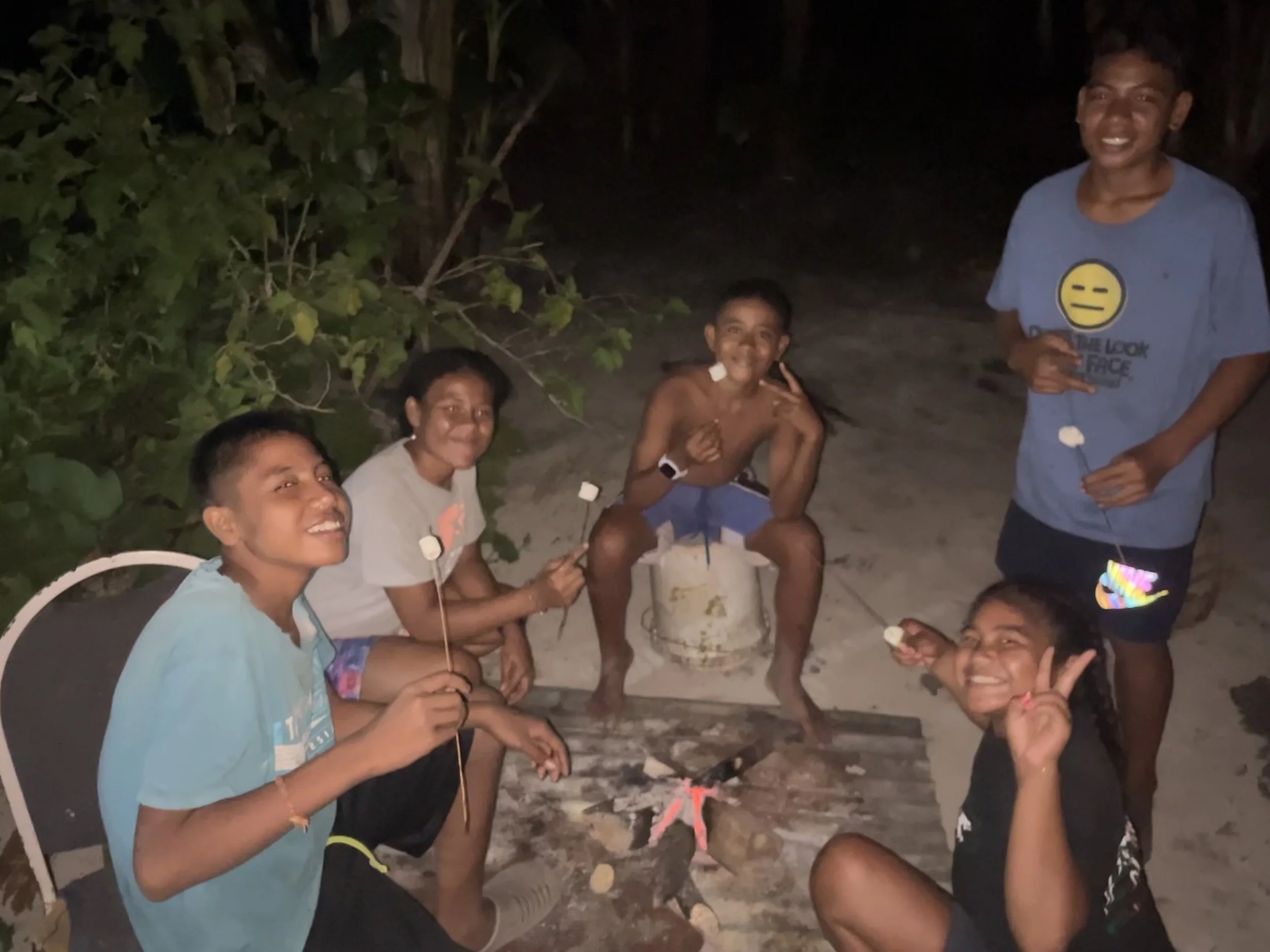
My most important lesson as an educator: the art of roasting a marshmallow.
Rose, Bud, Thorn
Thorn: Leaving a site I was trying so hard to connect to after I had already gotten so used to the village, my room, my school, and my life there. It took me literally being pulled out to realize that the move was hard, but ultimately for the best.
Rose: Having people who really got my back! And also getting to experience this beautiful part of the country, even if it was for less time than I expected.
Bud: Getting to see my friends and eat good food in town while I get set up with a new host family! And Early Service Training is coming up, so I get to reunite with everyone!
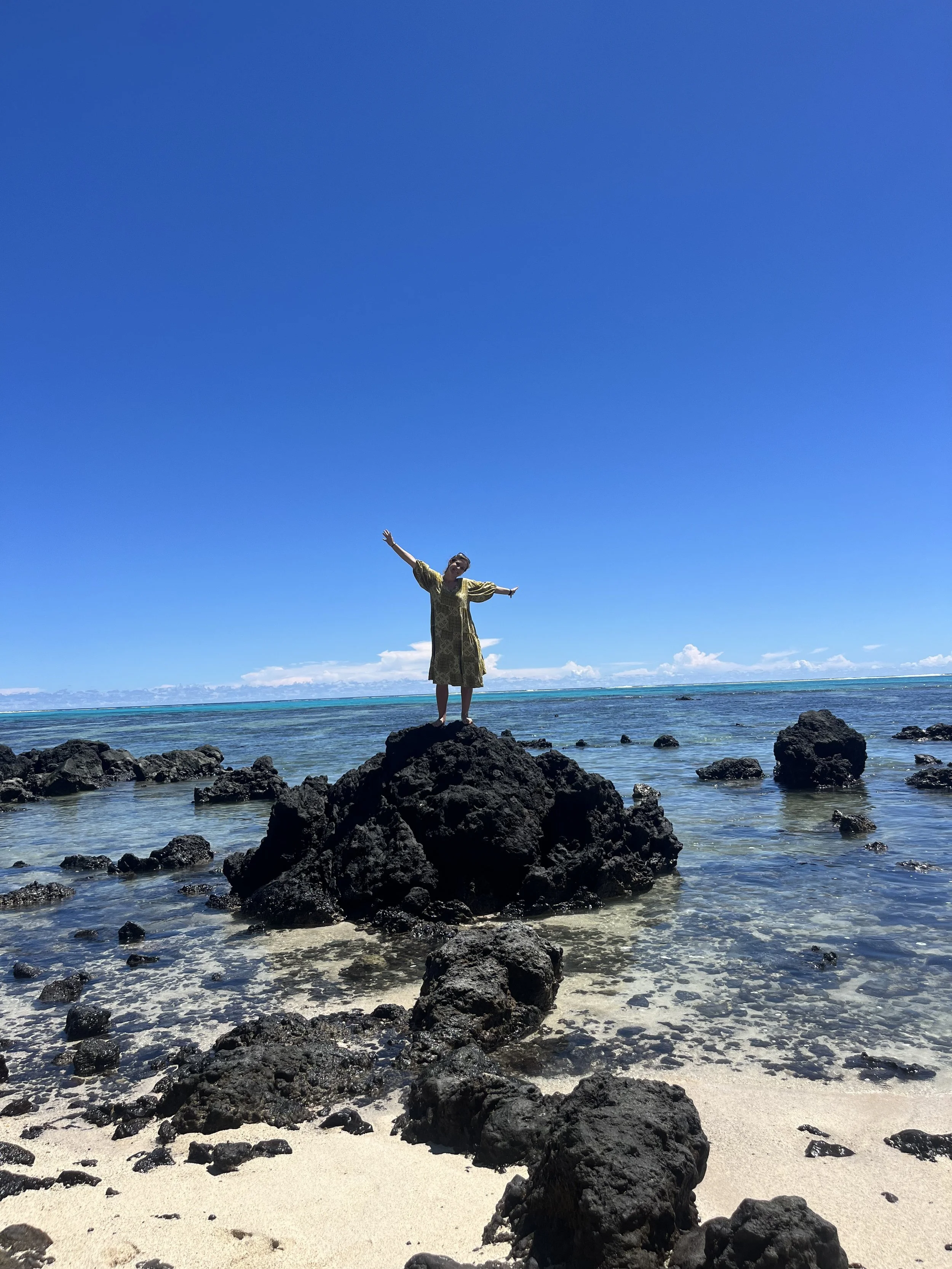
Farewell, Savai’i! I’ll miss you!